
News
INSIGHTS FROM OUR VISIT
Vietnam’s Branded Residential Market
By Anya Ngo, 18 November 2025
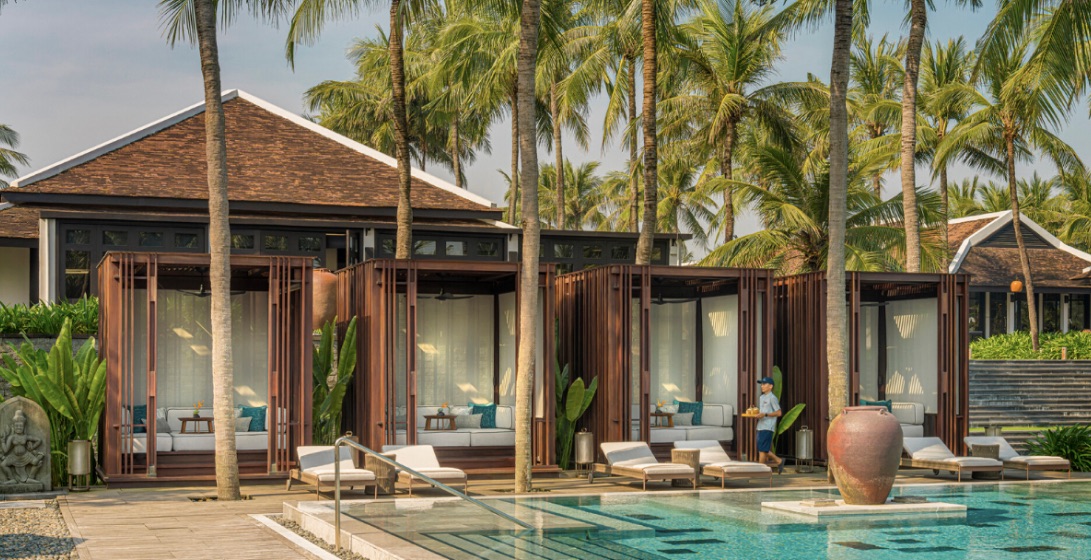
Four Seasons, The Nam Hai, Hoi An
Last month, Sorores visited Vietnam to meet with some of the country’s leading real estate developers and hospitality operators. Over the past decade, Vietnam has undergone significant transformation, with real estate emerging as one of the fastest-growing and most attractive investment sectors in Asia. The country’s appeal to both foreign and domestic investors is driven by strong GDP growth and rising consumer purchasing power, a maturing regulatory framework with improved land and housing laws, and expanding infrastructure that continues to unlock new urban and coastal development opportunities.
To understand the opportunity on the ground, we explored the bustling streets of Hanoi as well as the calm, historic beachside regions of Da Nang and Hoi An, observing a market that blends cultural heritage with a growing appetite for innovation and international standards of luxury, especially within the branded residential sector.
KEY BRANDED RESIDENCE DEVELOPMENTS
Over the past decade, branded residences have grown by more than 230% in APAC, and by 210% in Vietnam, underscoring the region’s rising importance within the sector. Vietnam now ranks as the fourth biggest market for branded residences globally.
In the capital city of Hanoi, a notable recent addition to the market is The Ritz-Carlton Residences developed by Masterise Homes. This collection of 104 standalone apartments across two buildings, The Crown and The Heritage, has set a new benchmark for the market, with prices reaching approximately USD $25,000 per square metre. This is particularly impressive given that prime apartment pricing in Hanoi typically ranges from USD $5,900-$11,800 per square metre (levels that already rival or exceed townhouse and villa pricing). The Ritz-Carlton’s pricing, more than double the upper end of the market, reflects both the scarcity of branded residential supply in the capital, and increasing demand for full-service amenities and professionally managed living.
In Ho Chi Minh City, Grand Marina, Saigon stands out as a transformative 10-hectare master-planned project on the Saigon River, also developed by Masterise Homes. Featuring both Marriott and JW Marriott Residences, it is recognised as the largest Marriott-branded residence scheme in the world, with approximately 4,500 luxury apartments. It also holds the distinction of being Vietnam’s first major urban branded residence development.
Beyond Vietnam’s two primary urban centres, a dynamic coastal luxury market is emerging in Da Nang and Hoi An, now recognised as one of the top global hotspots for branded residences. The region has attracted prestigious operators including Four Seasons, Mandarin Oriental, and Nobu, each blending their global DNA with a nuanced respect for local culture. On our visit, we explored several of these developments to understand what sets Vietnam’s next-generation branded residences apart.
Over the past decade, branded residences have grown by more than 230% in APAC, and by 210% in Vietnam, underscoring the region’s rising importance within the sector. Vietnam now ranks as the fourth biggest market for branded residences globally.
In the capital city of Hanoi, a notable recent addition to the market is The Ritz-Carlton Residences developed by Masterise Homes. This collection of 104 standalone apartments across two buildings, The Crown and The Heritage, has set a new benchmark for the market, with prices reaching approximately USD $25,000 per square metre. This is particularly impressive given that prime apartment pricing in Hanoi typically ranges from USD $5,900-$11,800 per square metre (levels that already rival or exceed townhouse and villa pricing). The Ritz-Carlton’s pricing, more than double the upper end of the market, reflects both the scarcity of branded residential supply in the capital, and increasing demand for full-service amenities and professionally managed living.
In Ho Chi Minh City, Grand Marina, Saigon stands out as a transformative 10-hectare master-planned project on the Saigon River, also developed by Masterise Homes. Featuring both Marriott and JW Marriott Residences, it is recognised as the largest Marriott-branded residence scheme in the world, with approximately 4,500 luxury apartments. It also holds the distinction of being Vietnam’s first major urban branded residence development.
Beyond Vietnam’s two primary urban centres, a dynamic coastal luxury market is emerging in Da Nang and Hoi An, now recognised as one of the top global hotspots for branded residences. The region has attracted prestigious operators including Four Seasons, Mandarin Oriental, and Nobu, each blending their global DNA with a nuanced respect for local culture. On our visit, we explored several of these developments to understand what sets Vietnam’s next-generation branded residences apart.
“Vietnam’s rapid rise in branded residences signals a market defined by scarcity, global brands, and growing demand for professionally managed living.”

SPOTLIGHT: DA NANG & HOI AN
Da Nang and Hoi An are neighbouring coastal destinations in central Vietnam, roughly 30km apart yet offering distinctly different experiences. Da Nang is a modern city with a vibrant beachfront, international airport access, and urban convenience. In contrast, Hoi An is a UNESCO World Heritage site; atmospheric, historic, and rich with traditional architecture, tailored craftsmanship, and lantern-lit streets.
For branded residences to succeed in emerging markets like these, developers and operators must deeply understand the target buyer – how they aspire to live, what cultural nuances they value, and how they form emotional connections with global brands. We observed this sensitivity to local culture across every project we visited, from architecture and space planning to materials, symbolism, and even spiritual philosophies.
Below are three case studies illustrating how global brands are shaping the next chapter of Vietnam's luxury residential landscape.
“Da Nang and Hoi An sit just 30km apart yet offer entirely different experiences.”
1. FOUR SEASONS, THE NAM HAI, HOI AN
![]()
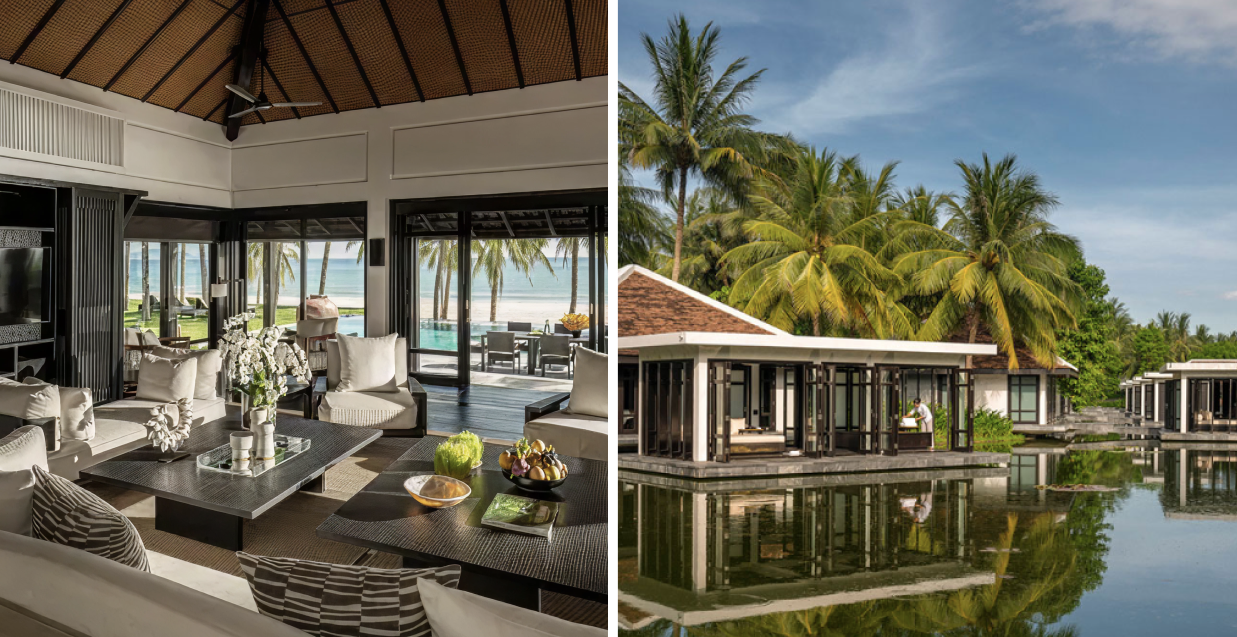
Four Seasons, The Nam Hai, Hoi An
Vietnamese motifs appear throughout, such as lotus flowers embroidered into linens (symbolising purity and enlightenment), handcrafted lacquer finishes, and sunken eggshell-lacquered sinks. Villas are configured like a traditional fishing village, with private courtyards, interconnected pavilions, and tropical landscaping that create a sense of serenity.
Multigenerational living, a strong cultural norm in Vietnam, is carefully embedded into the architecture. Large communal areas foster family connection, while separate villa buildings within each compound allow privacy for different generations living together. This thoughtful balance between closeness and independence reflects a deep understanding of the Vietnamese family structure, and demonstrates how global brands can successfully localise their design in culturally meaningful ways.
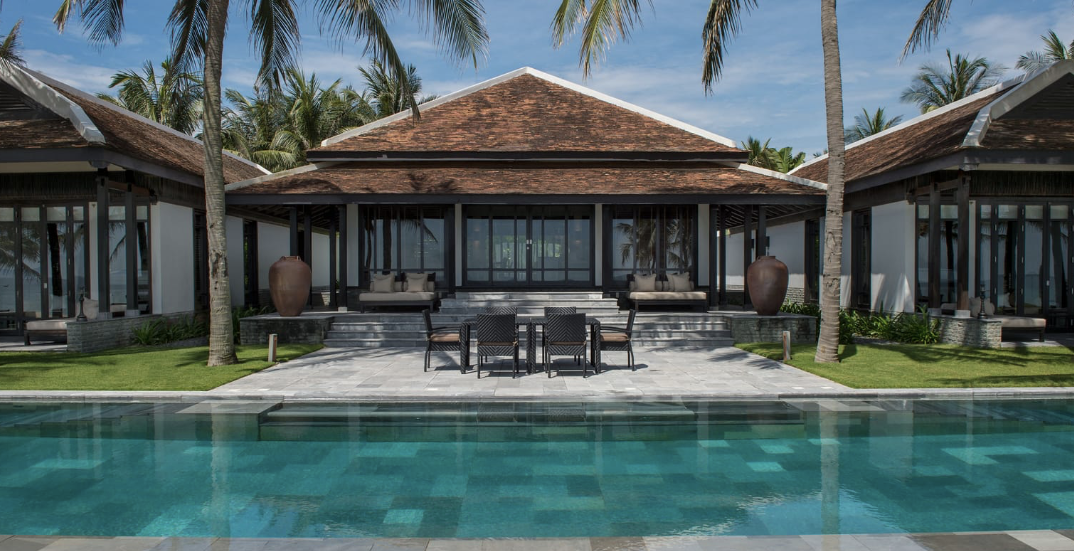
Four Seasons, The Nam Hai, Hoi An
2. MANDARIN ORIENTAL, DA NANG

Mandarin Oriental, Da Nang
Next, we visited the upcoming Mandarin Oriental, Da Nang, expected to open in 2026. Developed by The Nam Khang Corporation, Phase 1 will include 22 private residences, with an additional 38 villa residences planned in Phase 2.
The design blends classic French colonial architecture with refined Vietnamese motifs, using handcrafted ceramics, bamboo applications, and elements inspired by ancient Nguyen Dynasty palaces. Mandarin Oriental’s Asian heritage resonates strongly with Vietnamese culture, and their application of feng shui principles is particularly relevant.
This influence was evident in the show villa, with the five elements – wood, fire, water, metal, earth – expressed through materials and textures; floor-to-ceiling windows maximised natural light and airflow, welcoming positive yang energy; and furniture placement respected the command position, allowing sight of the door without direct alignment, supporting a sense of security and control.
This project illustrates how Mandarin Oriental leverages its cultural roots to create a product that feels authentically aligned with Vietnamese traditions while maintaining the brand’s hallmark sophistication.

Mandarin Oriental, Da Nang
3. NOBU, DA NANG
 Nobu Residences, Da Nang
Our final visit was to Nobu Residences Da Nang, developed by Viet Capital Real Estate (VCRE). This is one of Vietnam’s newest branded residential offerings and Nobu’s first entry into the country’s residential market. Known globally for its distinctive blend of Japanese minimalism and contemporary luxury, Nobu has evolved from a celebrated restaurant brand into a broader hospitality and lifestyle proposition, attracting buyers who value exclusivity, design, and curated living.
In Da Nang, the development brings Nobu’s signature aesthetic – warm woods, clean lines, and serene palettes – into a beachfront context overlooking My Khe Beach. The design integrates Japanese influences within the Vietnamese coastal landscapes, creating a modern but regionally grounded residential environment. Upon its completion, Nobu Residences in Da Nang will house a health treatment centre across three floors, beach club, multiple dining venues such as a rooftop restaurant and sky bar, as well as the signature Nobu restaurant. Nobu’s reputation for high-touch hospitality and world-class dining aligns with the preferences of younger buyers who prioritise experience and lifestyle over traditional resort-style living.
While Four Seasons and Mandarin Oriental draw heavily on Vietnamese heritage and craftsmanship, Nobu represents a more contemporary, lifestyle-led brand experience that appeals to buyers seeking modernity, wellness, and a sense of understated elegance.
 Nobu Residences, Da Nang
Vietnam’s real estate landscape is evolving rapidly, and the rise of branded residences is one of the clearest indicators of its growing global relevance. From Hanoi’s ultra-luxury urban towers to the culturally nuanced coastal resorts of Da Nang and Hoi An, the country is attracting world-class brands that recognise both the economic opportunity and the cultural richness of the market.
Across our visits, we saw a consistent theme: successful branded residences in Vietnam are deeply contextual – blending global standards with local heritage, lifestyle norms, and buyer expectations. As Vietnam continues to rise as one of Asia’s most exciting property markets, branded residences will play an increasingly central role in shaping how luxury living is defined in the region.

About | Consultancy | Creative | Marketing | Projects | Team | Careers
Sorores 2024© All Rights Reserved | Privacy & Cookies Policy
Sorores 2024© All Rights Reserved | Privacy & Cookies Policy